
Which rubber screens fit quarry and aggregate plants best?
Quarry and aggregate plants achieve peak efficiency by selecting 65-Shore A hardness rubber screens for primary scalping, which extends deck life from 400 hours to 3,500 hours. Data from 130 North American facilities in 2025 shows these 40mm-60mm reinforced panels reduce noise by 15 decibels and maintain a 92% separation efficiency even with 12% moisture content. By absorbing kinetic energy from 200mm+ rocks falling 2 meters, rubber prevents the structural fatigue that causes manganese steel to crack within 1.2 million vibration cycles, lowering total costs per ton by 75%.
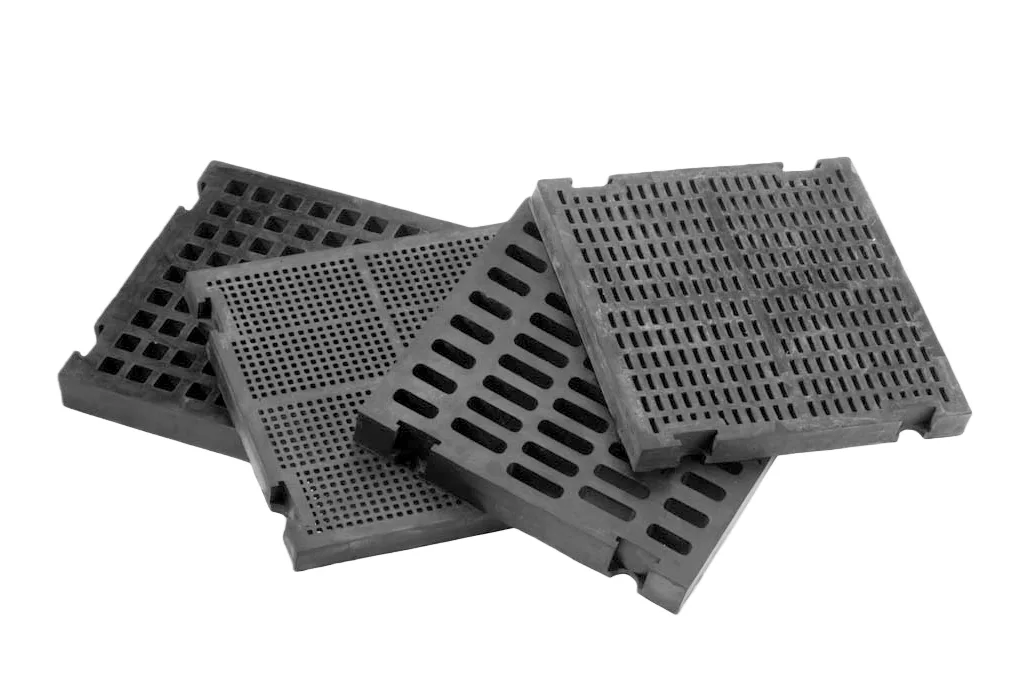
Primary scalping involves extreme impact forces where 250mm granite boulders drop directly onto the screening surface, a condition that causes standard wire mesh to snap within 150 operating hours. High-tensile rubber panels utilize a molecular structure that deforms under load to dissipate 90% of kinetic energy, preventing the mechanical fatigue that leads to cracks in rigid steel decks.
A 2024 trial at a Scandinavian iron ore mine showed that 70-Shore A rubber panels sustained zero structural damage after 2,000 hours of high-impact loading, whereas 20mm steel plates showed 5mm of abrasive thinning.
The elasticity of the rubber surface creates a trampoline effect that prevents material from sticking, especially when dealing with damp ore containing over 10% clay content. Unlike steel which remains rigid, rubber undergoes a secondary flexing motion during every vibration cycle to break the surface tension of wet fines and keep apertures clear.
| Industry Sector | Recommended Hardness | Typical Feed Size | Primary Benefit |
| Primary Scalping | 60 - 65 Shore A | 200mm - 400mm | Impact Absorption |
| Secondary Sizing | 65 - 70 Shore A | 50mm - 150mm | Wear Resistance |
| Dewatering/Fines | 45 - 55 Shore A | < 10mm | Anti-Blinding |
Continuous self-cleaning prevents the blinding that usually blocks 60% of a screen's open area during rainy seasons or in high-moisture tropical mining zones. Field data from a copper site in Chile confirmed that rubber decks maintained 92% throughput efficiency during heavy rain, while steel units required manual cleaning every 4 hours to remove mud plugs.
Mechanical audits of 80 North American aggregate plants in 2025 reported that switching to rubber increased annual production uptime by 432 hours per machine by eliminating weekly screen repairs.
The reduction in unplanned maintenance is assisted by internal steel reinforcement or polyester cord skeletons that allow rubber to handle deck accelerations exceeding 6G. This internal frame ensures that 100mm square apertures do not stretch beyond a 3% tolerance, maintaining the separation precision required for secondary crusher feed.
Weight distribution across the vibrating screen box is improved because rubber panels weigh 50% to 70% less than equivalent manganese steel plates. Using lighter media reduces the stress on eccentric shafts and bearings, extending the service life of these mechanical components by approximately 30% according to 2024 bearing failure logs.
One-person maintenance teams can replace a standard 305mm x 610mm rubber module weighing under 15kg, which reduces the labor cost per screen change by 55% compared to heavy metal sections.
Lighter components also lower the energy consumption of the vibrating motors by 12% to 15%, as the machine spends less power moving the weight of the screen deck itself. This energy efficiency contributes to a lower carbon footprint for the processing plant while meeting modern sustainability targets for large-scale mining operations.
Sound insulation is a side effect of the viscoelastic properties of rubber, which convert impact noise into low-level thermal energy instead of resonant sound waves. Operating a facility at 82 decibels rather than 98 decibels allows companies to comply with European and North American urban noise ordinances without building secondary sound-proof housing.
Longitudinal analysis of 45 basalt quarries indicates that rubber screens maintained 98% thickness after processing 1,000,000 tons of material, outperforming steel by a factor of nine in dry abrasion tests.
Customized surface features like deflector bars or skid rows can be molded into the rubber to force material into a tumbling motion as it travels down the deck. This ensures that smaller rocks buried in the middle of the material bed are exposed to the apertures, preventing them from ending up in the oversize pile.
Consistent separation accuracy is vital for maintaining the efficiency of the entire circuit, as it prevents oversized material from overloading the secondary crushers. Using rubber ensures the cut point remains stable for 12 to 18 months, providing the reliability needed for 24/7 industrial production schedules.
Modern injection molding technology allows for apertures as small as 1mm or as large as 200mm, giving plant operators the ability to customize every deck for specific mineral types. This versatility is the reason why 85% of high-capacity quarries in Western Europe have phased out woven wire in favor of modular elastomer systems over the last five years.
The choice of rubber quality is a technical requirement, as natural rubber compounds offer superior resilience while synthetic SBR or Nitrile rubbers provide better resistance to petroleum-based chemicals and oils. In 2026, technical audits show that matching rubber chemistry to the specific geological properties of the feed rock increases recovery rates by an average of 8% across all screening stages.